Health Care-Illness

Surprising Link Between Menthol And Alzheimer's Discovered in Mice
by DAVID NIELD 30/1/25 Science alert
It seems the chemical compound can stop some of the damage done to the brain that's usually associated with the disease.
-

-
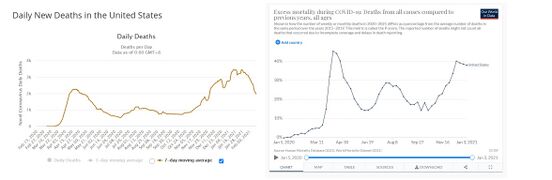 US Worldometer COVID Deaths vs Our World Data Excess deaths

Three ways to make dental care kinder for anxious patients
by Isabel Olegario 4/6/25 THE CONVERSATION
For many, a visit to the dentist brings fear, anxiety, or memories of uncomfortable experiences. But dentistry is changing – and it’s becoming much kinder.
Why coughs can linger long after you recover from an illness
by Kyle B. Enfielod 17/2/23 PBS NEWS
When was the last time you walked into a public space and didn’t hear someone coughing? After three years of flinching at the sound, it can be disarming to hear so many people coughing – and embarrassing if it’s you.
Patients say keto helps with their mental illness. Science is racing to understand why
Iain Campbell was gazing out the bus window on his way to work when he first sensed something radical was reshaping how he experienced the world.
Lifespan: Stories of Illness, Accident, and Recovery
by WOUB public Media 9/4/25 npr
On Lifespan, you’ll hear stories about encounters with the health care system. Each show contains stories bound by a common theme – a person’s personal journey through a particular type of medical trauma
Most Inmates With Mental Illness Still Wait For Decent Care
by Christine Herman 3/2/19 npr
Ashoor Rasho has spent more than half his life alone in a prison cell in Illinois — 22 to 24 hours a day. The cell was so narrow he could reach his arms out and touch both walls at once.
Sugar Industry and Coronary Heart Disease Research
by Cristin E. Keams 11/16 JAMA Internal Medicine
Early warning signals of the coronary heart disease (CHD) risk of sugar (sucrose) emerged in the 1950s. We examined Sugar Research Foundation (SRF) internal documents, historical reports, and statements relevant to early debates about the dietary causes of CHD and assembled findings chronologically into a narrative case study.
Burden of Disease
by Max Roser 2/24 Our World in Data
To assess the health of a population, it’s straightforward to focus on mortality, or concepts like life expectancy, which are based on mortality estimates. But this does not take into account the suffering that diseases cause the people who live with them.
Infectious Disease Modelling
Infectious Disease Modelling is a peer-reviewed open access journal aiming to promote research working to interface mathematical modelling, infection disease data retrieval and analysis, and public health decision support. The journal welcomes original research contributing to the enhancement of this interface, and review articles of cutting edge methodologies motivated by and applicable to data collection and informatics for public health decision making and policy.
Science, Medicine, and Animals.
by National Library of Medicine
Today, it is hard for us to fully appreciate the great revolution in medicine known as “germ theory” and the role that animal research played in its development. It seems impossible that people once believed that foul odors could create disease or that “evil spirits” could cause a person to become ill. We have also forgotten how rare it was for parents to see all of their children survive to adulthood. Still, it has been little more than a century and a half since Robert Koch made the discoveries that led Louis Pasteur to describe how small organisms called germs could invade the body and cause disease.
Cancer
by Saloni Dattani Our World In Data
Cancer is one of the biggest health challenges worldwide. As of 2021, around 15% of all deaths were cancer deaths, making it one of the most common causes of death globally.
Exposure-based assessment and economic valuation of adverse birth outcomes and cancer risk due to nitrate in United States drinking water.
by Alexis Temkin 9/19 ScienceDirect
Nitrate ingestion from drinking water has been associated with an increased risk of adverse birth outcomes as well as elevated risk of colorectal cancer and several other cancers. Yet, to date, no studies have attempted to quantify the health and economic impacts due to nitrate in drinking water in the United States.
Hair relaxer use and risk of uterine cancer in the Black Women's Health Study
by Kimberly A. Bertrand 15/12/23 ScienceDirect
Chemical hair relaxers, use of which is highly prevalent among Black women in the US, have been inconsistently linked to risk of estrogen-dependent cancers, such as breast cancer, and other reproductive health conditions. Whether hair relaxer use increases risk of uterine cancer is unknown.
Effects of radiofrequency electromagnetic field exposure on cancer in laboratory animal studies, a systematic review
Meike Mevissen May 2025 ScienceDirect
More than ten years ago, the World Health Organization’s (WHO) International Agency for Research on Cancer (IARC) published a monograph concluding there was limited evidence in experimental animals for carcinogenicity of Radio Frequency Electromagnetic Field (RF EMF).
Total and added sugar intakes, sugar types, and cancer risk: results from the prospective NutriNet-Santé cohort
by Charlotte Debras Nov.2020 ScienceDirect
Excessive sugar intake is now recognized as a key risk factor for obesity, type 2 diabetes, and cardiovascular diseases. In contrast, evidence on the sugar–cancer link is less consistent. Experimental data suggest that sugars could play a role in cancer etiology through obesity but also through inflammatory and oxidative mechanisms and insulin resistance, even in the absence of weight gain.
A review on anti-cancer effect of green tea catechins
by Zhe Cheng Nov.2020 ScienceDirect
This article reviewed inhibitory activities of green tea catechins (GTCs) against various tumorigenesis and their suppressive effects on cancer cell progression, metastasis, and angiogenesis according to a great number of kinds of literature, and then summarized the mechanisms of tea catechins-mediated cancer prevention in various cancer types. Special emphasis was placed on summarizing recent research highlighting the related techniques in improving GTCs’ effectiveness in the prevention of tumor progression and/or treatment of cancers.
Digestion, absorption, and cancer preventative activity of dietary chlorophyll derivatives
by Marion G. Ferruzzi Jan 2007 Science Direct
The growing body of epidemiological and experimental evidence associating diets rich in fruits and vegetables with prevention of chronic diseases such as cancer has stimulated interest in plant food phytochemicals as physiologically active dietary components.
Forget lung, breast or prostate cancer: why tumour naming needs to change
by Fabrice Andre 31/1/24 nature
Over the past century, the two main approaches to treating people with cancer — surgery and radiation — have focused on where in the body the tumour is. This has led to medical oncologists and other health-care providers, regulatory agencies, insurance companies, drug firms — and patients — categorizing cancers according to the organ in which the tumour originated. Yet there is a growing disconnect between classifying cancers in this way and developments in precision oncology, which uses the molecular profiling of tumour and immune cells to guide therapies.
Cancer-fighting CAR T cells show promising results for hard-to-treat tumours
by Rachel Fieldhouse 2/6/25 nature
Trial in China is one of the first times the immune therapy has worked against solid tumours.
Opinion: Cancer is not normal or inevitable. We should continue to fight it
by Kristina Marusic 25/1/24 EHN
Suggesting that we should no longer worry about preventing cancer because treatments have gotten better is like saying cars have gotten much safer, so none of us should bother wearing seatbelts anymore.
Cancer in wildlife: patterns of emergence
by Patricia A. Pesavento 16/8/18 nature reviews
Cancer is ubiquitous in wildlife, affecting animals from bivalves to pachyderms and cetaceans. Reports of increasing frequency demonstrate that neoplasia is associated with substantial mortality in wildlife species.
At least 180 aircrew pursuing MoD after cancer diagnoses
RAF flight sergeant Zach Stubbings, who died aged 47 in January, is one of at least six people who have received an out-of-court settlement from the MoD although the MoD has not admitted liability.
Alcohol Use Linked To Over 740,000 Cancer Cases Last Year, New Study Says
"Fewer than one in three Americans recognize alcohol as a cause of cancer," says Harriet Rumgay, researcher at the International Agency for Research on Cancer, the specialized cancer agency of the World Health Organization. "That's similar in other high-income countries, and it's probably even lower in other parts of the world."
Colon cancer survivors who exercise regularly live longer
A new study finds that regular exercise can help colon cancer survivors live longer lives after diagnosis, and in some cases, even longer than people who didn't have cancer.
For Louisiana’s ‘Cancer Alley,’ Study Shows An Even Graver Risk From Toxic Gases
by Victoria St. Martin 26/6/24 Inside Climate News
Levels of ethylene oxide more than 1,000 times higher than what’s considered safe—and far greater than previous estimates—were identified by researchers at John Hopkins.
Life, after diagnosis
People with cancer are living longer today because of better detection and treatments. There are more than 18.1 million cancer survivors in the U.S., and their ranks are growing. But they're also living longer with cancer’s after effects. In these stories, they share how their diagnoses shifted their paths, perspectives and priorities. Some found new purpose. Others rebuilt careers. Many redefined family bonds. They all say while cancer becomes part of your story, it doesn't have to define it.
Why plants don’t die from cancer
by Stuart Thompson 30/6/19 PBS NEWS
But Chernobyl’s exclusion zone isn’t devoid of life. Wolves, boars and bears have returned to the lush forests surrounding the old nuclear plant. And when it comes to vegetation, all but the most vulnerable and exposed plant life never died in the first place, and even in the most radioactive areas of the zone, vegetation was recovering within three years.
Are we neglecting global cancer care?
by Hellen Gelband 25/12/15 WORLD ECONOMIC FORUM
Start with the cancer burden: As we reach closure on the 2015 Millennium Development Goals for child survival, and as life expectancy continues to rise in most countries, the population at risk for cancer grows. Of the 8 million cancer deaths each year worldwide, 5 million of them already occur in low- and middle-income countries (the large majority in middle-income countries). That proportion is increasing as is the proportion of all deaths that are caused by cancer.
Cure or Carcinogen? CRISPR-Cas9 May Cause Cancer
A promising vehicle for gene therapies may have just popped a flat tire. Two new studies on the DNA editing tool CRISPR-Cas9 reveal that it may indirectly trigger new cancers—even when used to replace cancer-causing genes.
Cancer risk 'even from light drinking'
by Michelle Roberts 19/8/15 BBC
Experts say the findings reinforce the health message that people should limit how much they drink and have some alcohol-free days.
There is no guaranteed safe level of drinking, but if you drink within the recommended daily limits, the risks of harming your health are low, they say.
Cancer town
A year-long series reporting from Reserve, Louisiana, where the risk of cancer from air toxicity is 50 times the national average for the United States. This series of reports, films and public meetings will ask what residents have to do to win the right to a safe environment for their children
Chadwick Boseman and the changing landscape of who gets colon cancer
by Lydia A. Flier 4/9/20 PBS NEWS
An actor best known for the title role of T’Challa in Marvel’s “Black Panther,” Boseman died on this year’s Jackie Robinson Day, a day celebrating the legendary Black baseball player that Boseman portrayed in a 2013 film.
Neanderthal clues to cancer origins
A Neanderthal living 120,000 years ago had a cancer that is common today, according to a fossil study.
Even with advanced cancer, many patients still want to work
by Lisa Rapaport 21/12/15 Reuters
Many patients with advanced cancer may still want to work, but symptoms from their disease or related treatment prevent them from doing so, a U.S. study suggests.
The study focused on almost 700 adults aged 65 and under with metastatic cancer, meaning tumors had already spread to other parts of the body, and found that more than one-third of them continued to work after their diagnosis.
The breast cancer burden in lower income countries is even worse than we thought
Cancer surgeon Dr. Andre Ilbawi says he's haunted by the memory of a patient in Kenya whose suffering made him "want to scream so loud that you would lose your voice."
Delaware is shrinking racial gaps in cancer death. Its secret? Patient navigators
Sussex County, in the heart of southern Delaware's poultry farm country, is home to many people like Michelaine Estimable, a 62-year-old native of Haiti who came to work on the factory lines of a chicken-processing plant.
Charles Rice, Nobel Prize winner in Medicine: ‘It’s a crime that a drug exists that could cure everyone yet not everybody has access to it’
by Manuel Ansede 4/7/25 EL PAIS
This smiling man asking for a glass of water at a hotel bar has helped save the lives of millions of people, according to the Swedish committee that awarded him the Nobel Prize in Medicine. He is American virologist Charles Rice, who won the award five years ago for his role in the discovery of the hepatitis C virus, a pathogen that silently destroys the liver and can develop into a deadly cancer.
Gut microbiome in metabolic dysfunction-associated steatotic liver disease and associated hepatocellular carcinoma
by Harry Cheuk-Hay Lau nature reviews
Metabolic dysfunction-associated steatotic liver disease (MASLD) is the most prevalent chronic liver disease worldwide, affecting billions of the global population. It can gradually progress to more severe diseases, including steatohepatitis, cirrhosis and hepatocellular carcinoma.
Microbial BMAA and the Pathway for Parkinson’s Disease Neurodegeneration
by Daniela Nunes 6/2/20 frontiers
Microbial metabolism is an endless source of compounds with diverse biological activities ranging from vitamins to toxins, with a tremendous impact on human health and disease. The neurotoxin β-N-methylamino-L-alanine (BMAA) is an example of a microbial compound to which humans are differently exposed but whose health impacts are still not fully understood, even though current evidence points to an association between BMAA exposure and susceptibility to neurogenerative diseases.
Deadly Venoms Help Rather Than Hurt
by By Leah Shaffer 2/14/2015 Discover
Animal toxins can alleviate chronic pain without inducing tolerance or addiction because they target parts of the nervous system outside the brain. It seems counterintuitive that something meant to kill or paralyze could ultimately save lives, but by studying different toxins produced by animals, scientists are gaining greater insight into how pain works in the first place. In fact, one of the first clues to understanding how pain signals make it to the brain came from an unusual source: snails. But we’re getting ahead of ourselves. First, let’s look at just how we feel pain.
Deadly fungus that can "eat you from the inside out" is quickly spreading around the world
by Eric Ralls 15/6/25 Earth.com
Most molds and fungi are helpful, but some fungus and mold will jump from hospital wards to honeybee hives, and the line between helpful recycler and harmful invader grows blurrier each year.
The Cause of Alzheimer's Might Be Coming From Within Your Mouth
by Peter Dockrill 6/6/25 Science alert
In recent years, an increasing number of scientific investigations have backed an alarming hypothesis: Alzheimer's disease may not be merely a condition of an aging brain, but the product of infection.
Dry mouth, bad breath and tooth damage: the effects Ozempic and Wegovy can have on your mouth
by Adam Taylor 4/6/25 THE CONVERSATION
Ozempic and Wegovy have been hailed as wonder drugs when it comes to weight loss. But as the drug has become more widely used, a number of unintended side-effects have become apparent – with the weight loss drug affecting the appearance of everything from your butt to your feet.
Intravenous SARS-CoV-2 Spike protein induces neuroinflammation and alpha-Synuclein accumulation in brain regions relevant to Parkinson’s disease
Part of the clinical picture of Coronavirus disease 2019 (COVID-19) are neurocognitive symptoms including fatigue, sleep disturbances, cognitive impairment and anxiety (Taquet et al., 2022). In up to 10–20 % of patients, symptoms persist or develop after viral clearance, referred to as Post COVID-19 condition or commonly Long COVID (Taquet et al., 2022, WHO, 2022). However, neurocognitive symptoms cannot be fully explained by viral invasion into the brain, which appears to occur only in severe cases (Matschke et al., 2020, Solomon et al., 2020). One standing hypothesis for CNS symptoms is that viral proteins detach from the virus and reach the brain from the nasal cavity or through the blood circulation (Rhea et al., 2021, Theoharides, 2022, Meinhardt et al., 2021). Spike proteins are surface glycoproteins consisting of trimers, each composed of a membrane-anchored S2-subunit and an outward-oriented S1-subunit (Cai et al., 2020).
Three ways to make dental care kinder for anxious patients
by Isabel Olegario 4/6/25 THE CONVERSATION
During the COVID-19 pandemic, many dental clinics sought out non-aerosol-generating procedures (those that don’t spray water or create mist), to reduce viral transmission. SDF and ART became essential treatment approaches during that period – and their popularity has continued to grow. These techniques don’t just make dentistry more acceptable – they challenge the traditional belief that every cavity needs to be drilled and filled.
Bronze Age plague wasn't spread by fleas
by Anne Gibbons 22/10/15 Science
The plague has caused death and destruction in Europe at least since Roman times, launching at least three major pandemics that changed the course of history—the Plague of Justinian from 541 to 544, which weakened the Byzantine Empire; the Black Death, which killed almost half the population of Europe between 1347 and 1351; and the Great Plague of 1665, which lasted more than 30 years. Ancient DNA researchers have shown in recent years that Y. pestis caused all three of those pandemics. But until now, they were unable to determine whether Y. pestis caused reported plagues 2224 years ago in China and almost 2500 years ago in Greece. They suspected that ancient versions of the plague were not as devastatingly rapid in spread, but they could not test that idea because they lacked samples of the earlier pathogens.
Covid Update! That new mRNA smart bomb vaccine, and spike proteins causing Parkinson's
In the US we are in a pretty nice Covid valley with infections and sewage analysis showing low SARS CoV-2 activity. It’s still nothing like the good old days of 2021 and 2022 when we had some real breaks, and I diagnosed/treated some Covid cases here and there in my practice last month. Many more went undiscovered of course. About 1 in every 210 Americans has infectious Covid right now. The graphic above comes from PMC. Most experts are seeing a predictable summer wave building, probably to hit around mid July, fueled by variants like NB.1.8.1.
Global warming may increase the burden of obstructive sleep apnea
by Bastien Lechat 16/6/25 nature communications
High ambient temperatures are associated with reduced sleep duration and quality, but effects on obstructive sleep apnea (OSA) severity are unknown. Here we quantify the effect of 24 h ambient temperature on nightly OSA severity in 116,620 users of a Food and Drug Administration-cleared nearable over 3.5 years. Wellbeing and productivity OSA burden for different levels of global warming were estimated. Globally, higher temperatures (99th vs. 25th; 27.3 vs. 6.4 °C) were associated with a 45% higher probability of having OSA on a given night (mean [95% confidence interval]; 1.45 [1.44, 1.47]). Warming-related increase in OSA prevalence in 2023 was estimated to be associated with a loss of 788,198 (489,226, 1,087,170) healthy life years (in 29 countries), and a workplace productivity loss of 30 (21 to 40) billion United States dollars. Scenarios with projected temperatures ≥1.8 °C above pre-industrial levels would incur a further 1.2 to 3-fold increase in OSA burden by 2100.
Tree methane exchange in a changing world
by Vincent Gauci 19/6/25 nature reviews earth & environment
Tree surfaces facilitate methane (CH4) exchange between terrestrial systems and the atmosphere. In this Perspective, I consider methane emission and uptake in trees, the underlying mechanisms and their response to environmental changes. Methane emitted from trees predominantly originates in soils, being transferred through the stem. The highest tree methane emissions occur in waterlogged soil conditions. As such, trees in wetland and riparian forests are a net source of methane, with topical wetland trees emitting up to ~44 Tg CH4 yr−1. By comparison, trees on free-draining upland soils are a net sink of methane on the order of 50 Tg CH4 yr−1, with microbially mediated methanotrophy along the soil–tree continuum dominating the vertical attenuation of soil-derived methane fluxes.
Global warming may increase the burden of obstructive sleep apnea
by Bastien Lechat 16/6/25 nature communications
High ambient temperatures are associated with reduced sleep duration and quality, but effects on obstructive sleep apnea (OSA) severity are unknown. Here we quantify the effect of 24 h ambient temperature on nightly OSA severity in 116,620 users of a Food and Drug Administration-cleared nearable over 3.5 years. Wellbeing and productivity OSA burden for different levels of global warming were estimated. Globally, higher temperatures (99th vs. 25th; 27.3 vs. 6.4 °C) were associated with a 45% higher probability of having OSA on a given night (mean [95% confidence interval]; 1.45 [1.44, 1.47]). Warming-related increase in OSA prevalence in 2023 was estimated to be associated with a loss of 788,198 (489,226, 1,087,170) healthy life years (in 29 countries), and a workplace productivity loss of 30 (21 to 40) billion United States dollars. Scenarios with projected temperatures ≥1.8 °C above pre-industrial levels would incur a further 1.2 to 3-fold increase in OSA burden by 2100.
'Havana syndrome ’ and the mystery of the microwaves
Then Ambassador Stoessel, himself, fell ill - with bleeding of the eyes as one of his symptoms. In a now declassified 1975 phone call to the Soviet ambassador to Washington, US Secretary of State Henry Kissinger linked Stoessel's illness to microwaves, admitting "we are trying to keep the thing quiet". Stoessel died of leukaemia at the age of 66. "He decided to play the good soldier", and not make a fuss, his daughter told the BBC.
America's Vaccine Rollout Disaster
New York Mag Dec 30 2020 David Wallace-Wells
It’s happening all over again. For months, Americans who despaired about the country’s coronavirus-suppression efforts looked desperately to the arrival of a vaccine for a kind of pandemic deliverance. Now that it has arrived, miraculously fast, we are failing utterly to administer it with anything like the urgency the pace of dying requires — and, perhaps most maddeningly, failing in precisely the same way as we did earlier in the year. That is, out of apparent, near-total indifference.
Blood Clots Linked to AstraZeneca Vaccine Stem From Rare Antibody Reaction
NYT By Denise Grady April 9, 2021
Scientific teams from Germany and Norway found that people who developed the clots after vaccination had produced antibodies that activated their platelets, a blood component involved in clotting. The new reports add extensive details to what the researchers have already stated publicly about the blood disorder.
Excess mortality during the Coronavirus pandemic (COVID-19)
The chart here shows excess mortality during the pandemic for all ages using the P-score.6 To see the P-scores for other countries click Add country on the chart.
Persistence and Evolution of SARS-CoV-2 in an Immunocompromised Host
[https://www.nejm.org/doi/full/10.1056/NEJMc2031364 New England Journal of Medicine 12/03/20
Although most immunocompromised persons effectively clear SARS-CoV-2 infection, this case highlights the potential for persistent infection5 and accelerated viral evolution associated with an immunocompromised state.
Extraordinary Patient Offers Surprising Clues To Origins Of Coronavirus Variants
NPR 2/02/21 MICHAELEEN DOUCLEFF
The sequences showed Li and his team that the virus was changing very quickly inside the man's body. The virus wasn't picking up just one or two mutations at a time. But rather, it acquired a whole cluster of more than 20 mutations. Scientists had never seen SARS-Cov-2 mutate so quickly during the whole pandemic.
Cardiovascular Magnetic Resonance Findings in Competitive Athletes Recovering From COVID-19 Infection
Of 26 competitive athletes, 4 (15%) had CMR findings suggestive of myocarditis and 8 additional athletes (30.8%) exhibited LGE without T2 elevation suggestive of prior myocardial injury. COVID-19–related myocardial injury in competitive athletes and sports participation remains unclear.
'Toxic Individualism': Pandemic Politics Driving Health Care Workers From Small Towns
Rural hospitals were in deep trouble before the pandemic. Morgan says 132 of them have closed since 2010. COVID-19 made matters worse. The surge of desperately sick and highly contagious patients stopped hospitals from doing the lucrative elective outpatient procedures that keep them in business. Their small staffs have been run ragged. And the pandemic has filled the air with vitriol against medical expertise.
More than a quarter of all the public health administrators in Kansas quit, retired or got fired this year, according to Vicki Collie-Akers, an associate professor of population health at the University of Kansas. Some of them got death threats. Some had to hire armed guards.
Hunting for 'Disease X'
Sam Kiley Tue December 22, 2020
Humanity faces an unknown number of new and potentially fatal viruses emerging from Africa's tropical rainforests, according to Professor Jean-Jacques Muyembe Tamfum, who helped discover the Ebola virus in 1976 and has been on the frontline of the hunt for new pathogens ever since.
"We are now in a world where new pathogens will come out," he told CNN. "And that's what constitutes a threat for humanity."
As a young researcher, Muyembe took the first blood samples from the victims of a mysterious disease that caused hemorrhages and killed about 88% of patients and 80% of the staff who were working at the Yambuku Mission Hospital when the disease was first discovered.
A Supercomputer Analyzed Covid-19 — and an Interesting New Theory Has Emerged
A Supercomputer Analyzed Covid-19 — and an Interesting New Theory Has Emerged Elemental Thomas Smith Aug 31·2020 8 min read
A closer look at the Bradykinin hypothesis
Earlier this summer, the Summit supercomputer at Oak Ridge National Lab in Tennessee set about crunching data on more than 40,000 genes from 17,000 genetic samples in an effort to better understand Covid-19. Summit is the second-fastest computer in the world, but the process — which involved analyzing 2.5 billion genetic combinations — still took more than a week.
According to the team’s findings, a Covid-19 infection generally begins when the virus enters the body through ACE2 receptors in the nose, (The receptors, which the virus is known to target, are abundant there.) The virus then proceeds through the body, entering cells in other places where ACE2 is also present: the intestines, kidneys, and heart. This likely accounts for at least some of the disease’s cardiac and GI symptoms.
The True Coronavirus Toll in the U.S. Has Already Surpassed 200,000
<embed> https://www.nytimes.com/interactive/2020/08/12/us/covid-deaths-us.html?action=click&module=Top%20Stories&pgtype=Homepage </embed> NY Times By Denise LuAug. 13, 2020
Across the United States, at least 200,000 more people have died than usual since March, according to a New York Times analysis of estimates from the Centers for Disease Control and Prevention. This is about 60,000 higher than the number of deaths that have been directly linked to the coronavirus.
Smallpox and other viruses plagued humans much earlier than suspected
<embed> https://www.nature.com/articles/d41586-020-02083-0?utm_source=Nature%20Briefing&utm_campaign=a0e80cbbed-briefing-dy-20200724&utm_medium=email&utm_term=0_c9dfd39373-a0e80cbbed-42787455&fbclid=IwAR2saXk615K6gst45KlLNiavgGkaQrYa_kMrNYHCHXmsyAXq0331iZp_RYo </embed>Nature Laura Spinney 23 JULY 2020
The death date of smallpox is clear. After killing more than 300 million people in the twentieth century, it claimed its last victim in 1978; two years later, on 8 May 1980, the World Health Assembly declared that the variola virus, which causes smallpox, had been eradicated. But the origins of this devastating virus are obscure. Now, genetic evidence is starting to uncover when smallpox first started attacking people.
Humans as far back as AD 600 carried variola, an international research team reported this week1 after years of fishing for viral DNA in ancient human remains. The analysis also implies that the virus was circulating in humans even earlier: at least 1,700 years back, in the turbulent period around the fall of the Western Roman Empire, when many peoples were migrating across Eurasia.
Inside the body, the coronavirus is even more sinister than scientists had realized
Researchers exploring the interaction between the coronavirus and its hosts have discovered that when the SARS-CoV-2 virus infects a human cell, it sets off a ghoulish transformation. Obeying instructions from the virus, the newly infected cell sprouts multi-pronged tentacles studded with viral particles.
These disfigured zombie cells appear to be using those streaming filaments, or filopodia, to reach still-healthy neighboring cells. The protuberances appear to bore into the cells’ bodies and inject their viral venom directly into those cells’ genetic command centers — thus creating another zombie.
We Have No Idea If Covid Immune Responses Fall Off Rapidly in Cases Where There Is A Full Response!
<embed> https://www.dailykos.com/stories/2020/7/13/1960485/-We-Have-No-Idea-If-Covid-Immune-Responses-Fall-Off-Rapidly-in-Cases-Where-There-Is-A-Full-Response?utm_campaign=spotlight </embed> DailyKos July 13 2020
We barely understand how the immune system works, actually, that isn’t completely accurate, we know parts of it. We know that a full response involves numerous cell types. Making antibody isn’t the end-all and be-all of the immune response. As I wrote above, long-term immunity requires T and other types of cells. We don’t even fully understand how long term anti-body responses work, completely. What triggers are necessary to get anti-body production upon reexposure? None of these studies are looking at the immune responses of the folks they are examining, they are looking at one aspect of a very complex system and drawing huge conclusions about the importance of the work.
COVID-19 Antibody Response Drops in 3 Months According to Kings College London Report in Review
In the first longitudinal study of its kind, scientists analysed the immune response of more than 90 patients and healthcare workers at Guy’s and St Thomas’ NHS foundation trust and found levels of antibodies that can destroy the virus peaked about three weeks after the onset of symptoms then swiftly declined.
I'm a physiotherapist. Seeing the impact of Covid on survivors will haunt me forever
<embed> https://www.theguardian.com/society/2020/jun/25/physiotherapist-seeing-impact-covid-survivors-haunt-forever </embed>
I’ve never seen anything like coronavirus before. Recovering will be a Herculean task for patients, but we are here to help.
But never have I seen the cracked-glass effect on lung CT scans like those of Covid-19 patients. I have stared at them wondering where the breath is coming from, worrying if they will be able to conjure up the respiratory effort to sit, stand, step, move, live. Those scans will skulk in the depths of my brain for the rest of my days.
Clinical and immunological assessment of asymptomatic SARS-CoV-2 infections
| Nature Published: 18 June 2020
These data suggest that asymptomatic individuals had a weaker immune response to SARS-CoV-2 infection. The reduction in IgG and neutralizing antibody levels in the early convalescent phase might have implications for immunity strategy and serological surveys.
<embed> https://www.dailykos.com/stories/2020/6/24/1955596/-Widely-cited-study-has-left-some-doubting-a-COVID-19-vaccine-is-possible-but-not-so-fast </embed>
